Mumbai Gets A One Stop Solution: All You Need To Know About The MumbaiOne App – A Gamechanger For Public Transit in The MMR

Celebrations in the Mumbai Metropolitan Region (MMR) peaked on 8 October 2025, as the Mumbai Metro’s Aqua line’s last leg – Aarey JVLR to Cuffe Parade was made operational, along with the inauguration of the Navi Mumbai International Airport. But what accompanied these events was the launch of the Mumbai One App. The National Common Mobility Card (NCMC) by the same name was launched with the inauguration of the Metro Yellow and Red lines, while the mobile application was in development for a long time. The wait has finally come to an end as the application is rolled out for public use with periodic updates.

Features

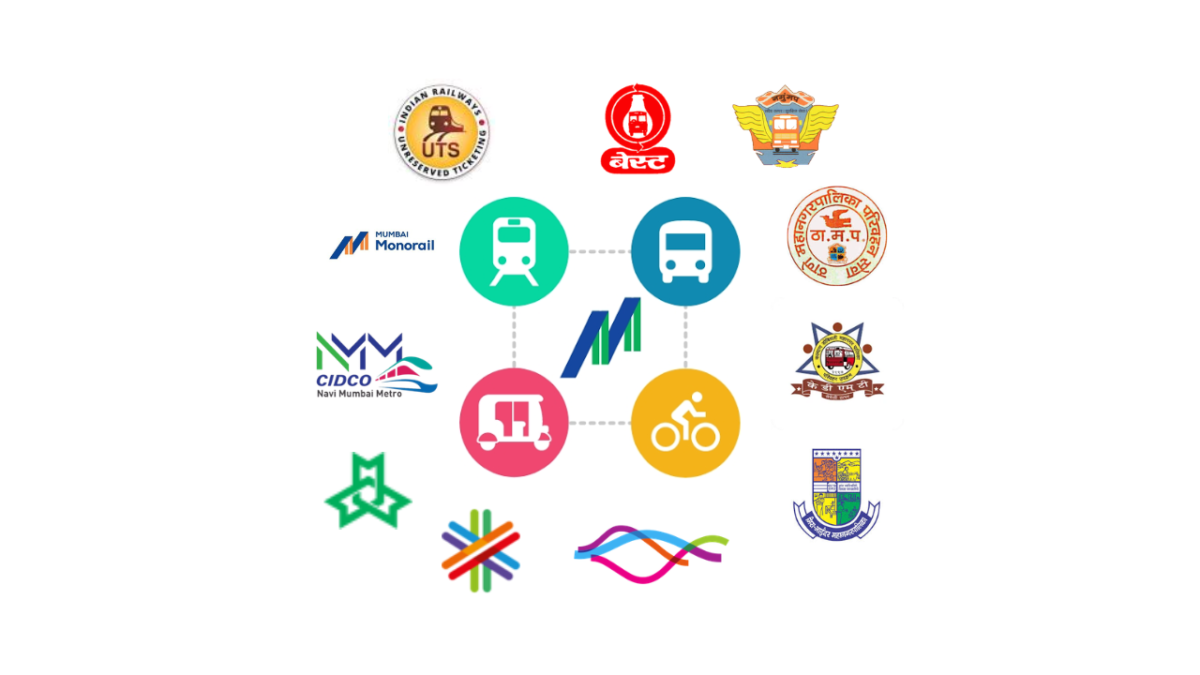
The Mumbai One app allows a passenger to travel across Mumbai City and its extended suburbs with a single payment system. This currently includes the Metro, Monorail, bus ticketing in BEST, NMMT, TMT and MBMT as well as the Mumbai Suburban Railway. The sole drawback of NCMC not being able to offer interoperability in other transport undertakings is ruled out as MMRDA has managed to bring buses, trains and metro ticketing under the ONDC umbrella. The app does not offer live tracking as of now, but the ticketing part is working well.

An interactive map – similar to the one seen at automatic ticket vending machines (ATVMs) at the railway stations is present in the app to choose the source and destination. Once finalised, the user can further filter out the mode of transport and choose which ticket to pay for.

A walkthrough video for the Mumbai One app can be seen below:

Metro and Suburban Rail

The Mumbai One app offers a quick ticketing feature for all the operational metro lines in Mumbai and Navi Mumbai, as well as the Mumbai Monorail. As Monorail services are suspended, it was not possible to test the app as of now. The Mumbai Metro Aqua line network was updated within 72 hours after the application was made available to the public. Suburban rail ticketing is linked with the UTS (Unreserved Ticketing System) App.

Bus Ticketing

Travel on BEST buses was pretty simple, as the system for authenticating QR Tickets is already built into the Ticketing machines. Some conductors do confuse the ticket with a UPI Payment QR Code, but cooperate when made aware of the app.

 Ground testing (not sponsored) took a month to bring the Thane Municipal Transport conductors aboard this system. TMT continued with ‘cash payment only’ until the complete rollout of the MaziTMT app this February. The system included two ways of verification – enabling the QR Code scanner in the ticketing machine or entering a token number, unique for each conductor. The conductors got so habituated to the token system, it became difficult to convince them to use the QR Code Scanner. In the earlier days, conductors complained of network errors in their machines as an excuse to deny e-ticketing, but that issue was resolved in a month once the higher-ups in TMT took cognisance of the same. The machines were updated within a week, and network connectivity is no more an excuse, and one can rely on the Mumbai One app as a mode of payment on board a TMT bus. Where a BEST conductor needs to feed stages and number of passengers before authenticating a mobile ticket, TMT went for a simpler system to just scan the M-Ticket QR and all the details easily flash in front of the conductor.

For NMMT and MBMT, the system is simple and sorted. The sole requirement is confirmation of the route from the bus conductor so as not to be confused with the short trips. Conductors happily guide the same, even in crowded situations. Ticket verification is done by simply opening the QR scanner on the ticketing machine. Both NMMT and MBMT have the same user interface for the ticketing system, which eliminates confusion. Both have a tie-up with PhonePe for digital payments and do not require entering any ticket details to verify mobile tickets purchased through the Mumbai One app.

Areas for Improvement

Ticketing in buses is a tedious part when dealing with digital payments, as the process takes an additional 30 seconds (every second counts), which creates a blocker for the conductor and inconvenience to the passengers. The Chalo app solved this with their in-app wallet and the Railways solved this issue with their R-Wallet linked to the UTS account. For some reason, one cannot book a return ticket for local trains through this app. There is a good scope to introduce an in-app wallet in Mumbai One, as Payments through the UPI Lite Wallet (a feature aimed at small payments without using UPI PIN) also take time to process by the payment gateway.

Conclusion

The Mumbai One application is solving the long-awaited problem of a common app to fulfil the travel needs in Mumbai & its extended suburbs. In future, we can expect all the errors sorted out at least in terms of bus ticketing. This article cannot be stretched more as the scenario is crystal clear, and users can happily rely on one app for travel needs in BEST, TMT, NMMT and MBMT. The next step towards a better commuting experience will be the integration of bus tracking with Google Maps. The railways are already on board, and so is BEST undertaking.

Download Mumbai One on Android and iOS.

P.S: BESTpedia is also on YouTube. Please do subscribe.

Loading

Flattr this!

Taking A Break From Traditional Rivalry, BEST And TMT Get New Common Bus Stop At Mulund Station

In what seems to be a welcome break from the constant rivalry between different municipal transport bodies within the Mumbai Metropolitan Region (MMR), the Birhanmumbai Electricity Supply and Transport (BEST) undertaking and the Thane Municipal Transport (TMT) undertaking have set up a combined bus shelter for both their buses at Mulund Station.

While the rivalry between BEST and TMT was predominantly along the coveted Thane-Borivali Route (AS-700 and AC-65), it eventually expanded to other routes including non-AC ones as well. Thankfully, it never went as bad as the relationship between BEST and the Navi Mumbai Municipal Transport (NMMT) undertaking went when in 2010, NMMT refused entry to BEST’s AS-505 to its bus station at CBD Belapur while BEST refused entry to AC-125 at Santacruz and Bandra Bus Station.

While BEST and TMT (also NMMT) buses do enter each others’ bus stations and halt at each others’ bus stops, they are always clearly demarcated. For example, at Agarkar Chowk, TMT buses stop at a unipole marked with TMT’s routes, similarly on the Thane Belapur Road, bus shelters will see a separate unipole for BEST buses.

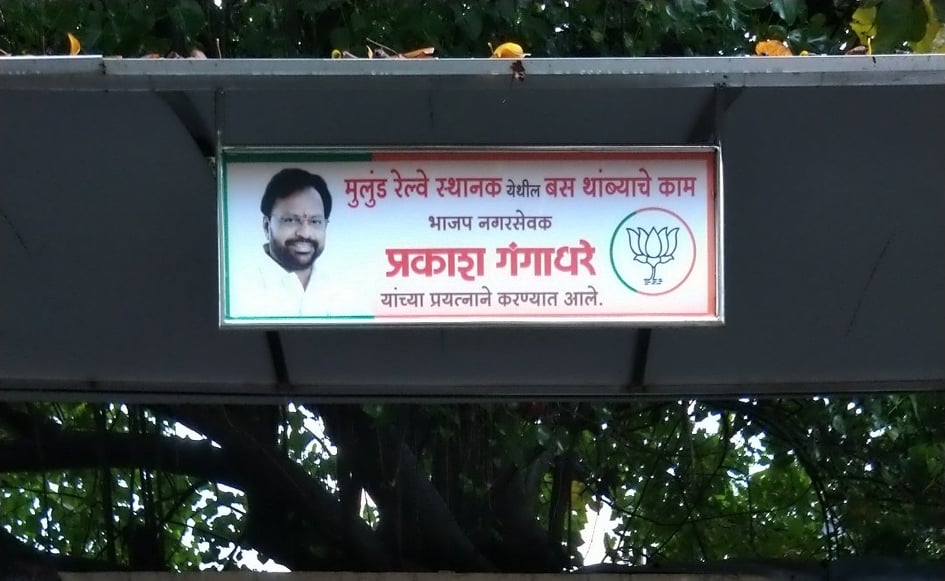
The bus stop at Mulund is an initiative of the local corporator Prakash Gangadhare of the Bharatiya Janata Party, representing Ward No 104 of the T-Ward in the Municipal Corporation of Greater Mumbai (MCGM) who is also a member of the BEST committee. It was built by combining three existing bus stops –Dr Rajendra Prasad Road and Sardar Vallabhai Patel Road and Mulund Railway Station (West) and is located at Jata Shankar Dosa Road (JSD Road). The earlier TMT bus stops have been demolished by the MCGM.

BEST buses that earlier stopped at Dr Rajendra Prasad Road include the following: 303, 396 Ltd, 398 Ltd, 422, 424, 460 Ltd, C-16 Exp.
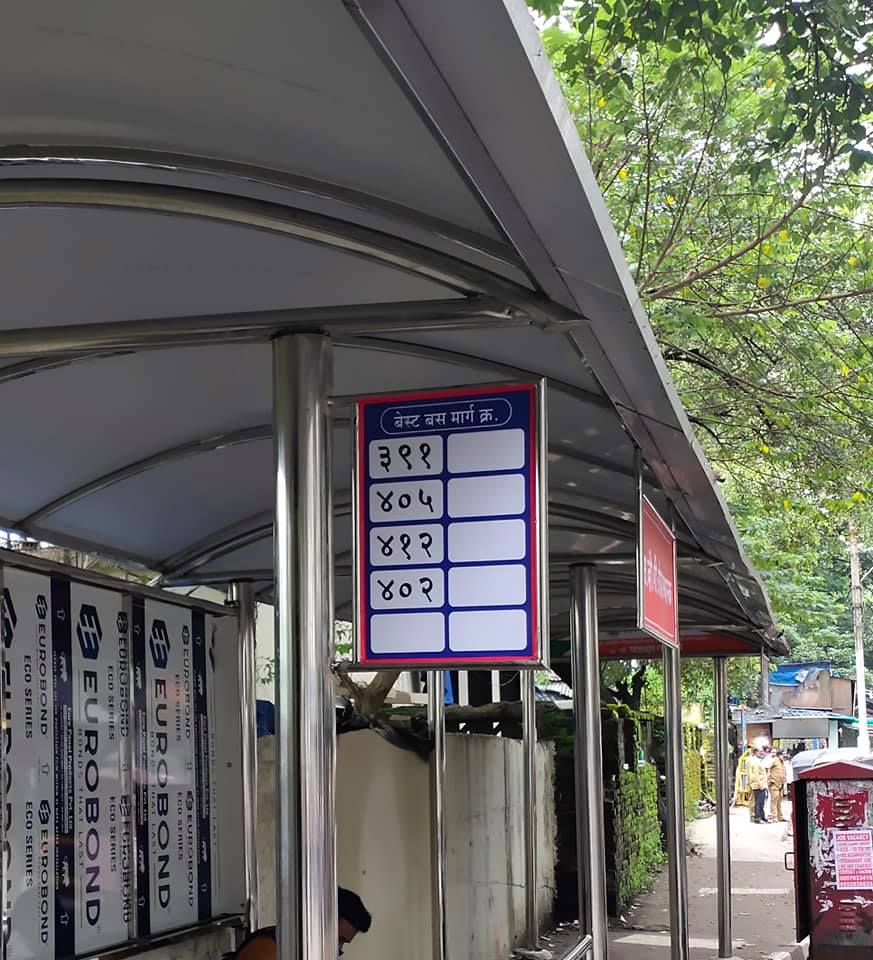
BEST feeder buses that earlier stopped at Sardar Patel Road include the following: 391, A-402, A405, A412.
TMT buses that stopped nearby earlier include: 85, 88, 102, 104, 110, 115, 122.

Fellow transit fan and BEST enthusiast Vishal Naik took some photographs of the bus stop. Another BEST enthusiast, Rupak Dhakate pointed out that the bus stops should be segregated since they would cause confusion between BEST and TMT users. He also pointed out that the current route signage did not differentiate bus routes based on the colour coding that BEST uses – black for regular, red for limited, blue for air-conditioned and green for express routes – another potential situation that may cause confusion.

Below are some pictures of the bus stop, clicked by Vishal Naik.

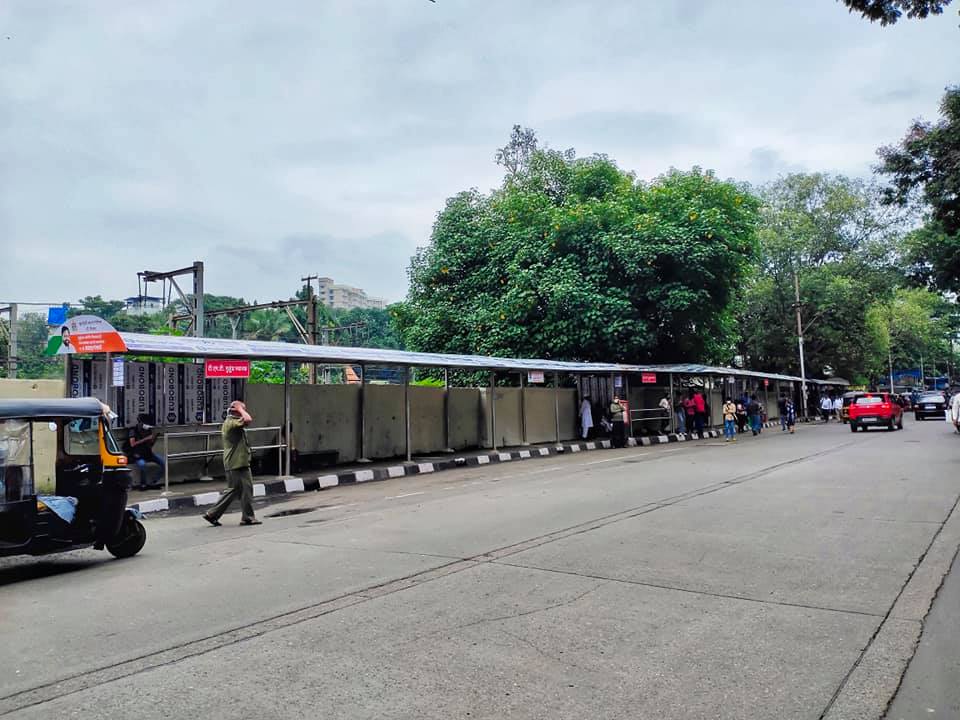
The new bus stop when viewed across the street (Vishal Naik)
A unipole marking BEST buses that stop at this bus stop. Note that all of these buses are AC routes, and thus should have an A prefixed to them, which they don't. (Vishal Naik)
A unipole marking BEST buses that stop at this bus stop. Note that all of these buses are AC routes, and thus should have an A prefixed to them, which they don’t. (Vishal Naik)
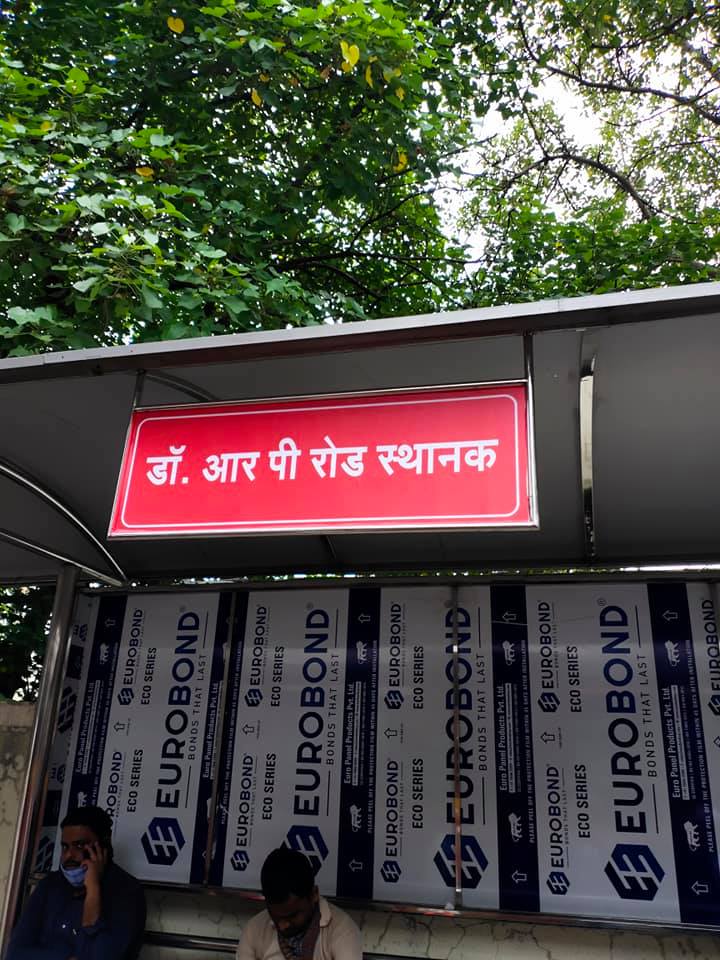
A name board marking the bus stop as Dr Rajendra Prasad Road (Dr R. P Road) (Vishal Naik)
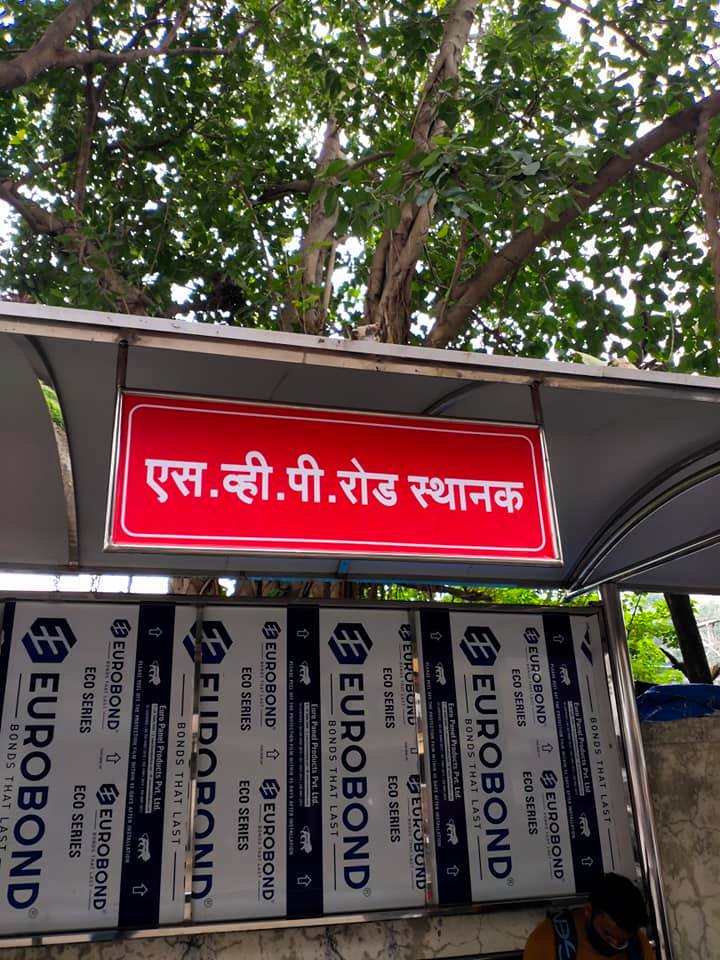
A name board marking the bus stop as Sadar Vallabhai Patel Road (S. V. P Road) (Vishal Naik)

Of course, there is a small problem. Apart from the congestion issues that Rupak mentioned earlier, there is also the issue of auto-rickshaws.

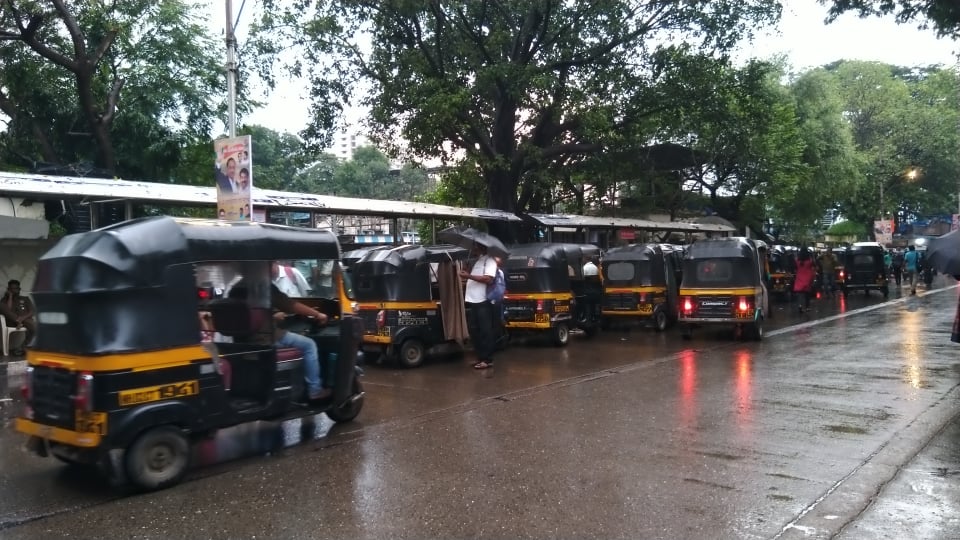
When BEST launched its AC mini-buses in Andheri in late 2019, auto-rickshaws cried foul as they quickly lost patrons. In the case of Mulund, it seems the auto-rickshaw fleet pre-empted that and decided that they’d park right in front of the new bus stop. Looks like the Mumbai Traffic Police have a task on their hands.

Auto-rickshaws waiting to pick up passengers right outside the new bus stop (Gandharva Purohit)

Let’s hope this bus stop does well for both BEST and TMT!

Featured Image: Photo of Prakash Gangadhare at the new bus stop (Gandharva Purohit)

Do follow Rupak on Twitter (slzrupak) and Instagram (@mlv.rupak).
Do follow Vishal on Twitter (@vnaik23) and Instagram (@not_huge).
Do follow Gandharva on Twitter (@gp30543).

If you intend to step out please wear a mask, carry sanitizer and maintain social distancing.

Loading

Flattr this!

Meet Punyadasham, Pune’s New AC Bus Service

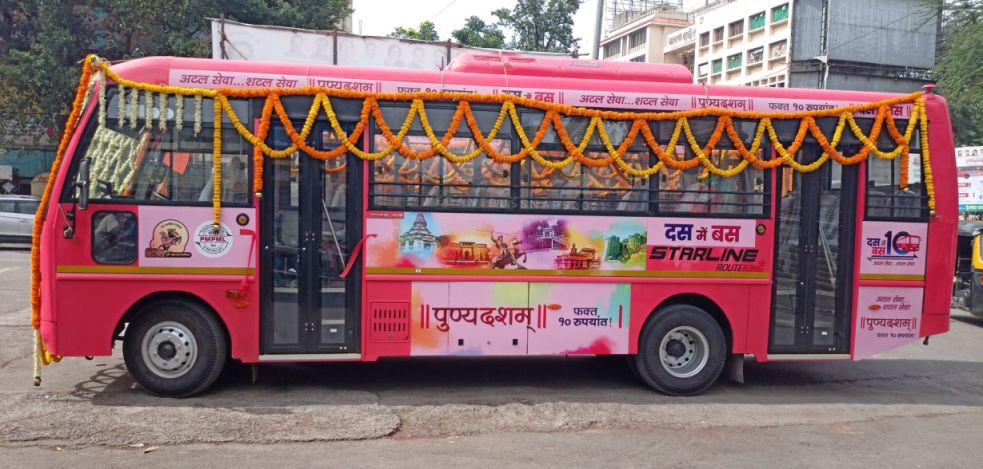
In another plan to get more people to use public transport, the Pune Mahanagar Parivahan Mahamandal Limited (PMPML) has introduced its new air-conditioned midi-bus, the Punyadasham. Fifty CNG-powered Eicher buses will be used as part of the Atal Seva Shuttle Scheme which will see these buses ply in the Peth areas of Pune with a flat fare of ₹10 which operates as a bus pass and can be used multiple times. The service was inaugurated on 9 July this year by former Chief Minister and current Leader of Opposition Shri Devendra Gangadharrao Fadnavis who travelled in the inaugural bus from Mahatma Phule Mandai to the Mayor’s House.

In order to buy the ticket, one must produce a government-issued ID such as a PAN Card, Aadhaar Card, etc. The existing ₹40 and ₹70 Daily Pass won’t work on these buses.

In an article titled Bus, Aadhaar dedo!, Pune Mirror decried this move as a bad idea, notwithstanding the fact that other cities such as Bangalore have had such a rule from 2015. They also lamented over how AC buses were violating Covid-19 norms in another article. It seems such criticism is only valid when a BJP-run Pune and Pimpri-Chinchwad Municipal Corporation (PMC/PCMC) runs AC buses (PMPML) and not when a Shiv Sena-led Brihanmumbai and Thane MC (BMC/TMC) run AC buses (BEST/TMT) from the start of the Wuhan Virus pandemic. The Pune Mirror also cried along with the NCP when the Corporation decided to curtail 15 loss-making routes.

You can read about the PMPML’s earlier attempts to rationalise services using their ATAL and ABHI plans here: Colour-Coded Buses To Identify Routes.

PMPML should however, consider using the existing Mi Card as an ID Card for these buses, since they are to be used as Common Ticketing systems for the Pune Metro.

A ₹10 AC ride in the heart of the city. Have fun, but take precautionary measures.

Featured Image: Punyadasham Bus tweeted by Buses of Pune on Twitter.

If you intend to step out please wear a mask, carry sanitizer and maintain social distancing.

Loading

Flattr this!

Electric Buses Craze Hits MMR; BEST Leads The Way While NMMT Wants To Scrap Diesel Buses

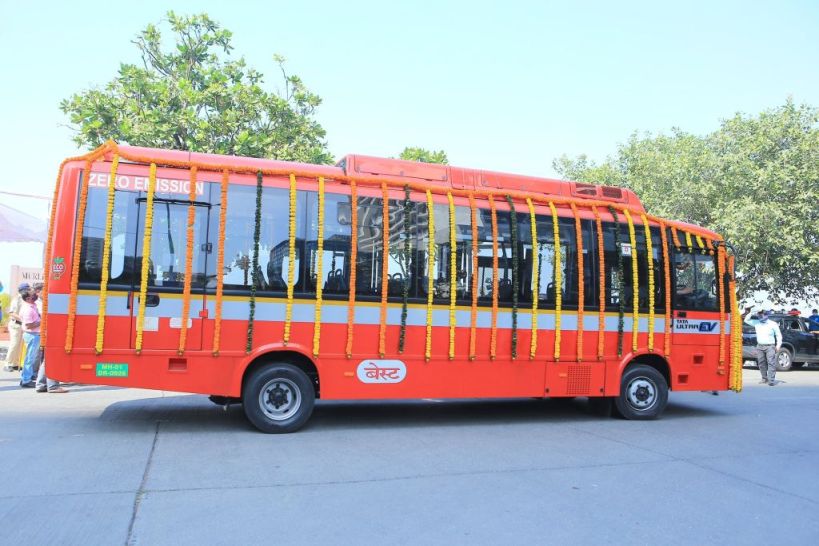
In what could only be good news, the electric bus craze has finally hit the Mumbai Metropolitan Region (MMR) with BEST leading the way. According to a report by Rajendra Aklekar in Mid-Day, the Brihanmumbai Electricity Supply and Transport (BEST) undertaking has the maximum in its fleet. In December, BEST had received the first batch of a 340 bus order of Tata Ultra electric AC buses from Tata Motors. Prior to this, BEST had received both AC and non AC electric buses from Olectra (formerly Goldstone) and also had a fleet of Diesel Electric Hybrid buses from Tata Motors.

The Navi Mumbai Municipal Transport (NMMT) undertaking is second in the race, currently operating 30 air-conditioned JBM Solaris electric buses. NMMT is looking to set up 36 charging stations. NMMT has also stated in its recent municipal budget that it will eventually do away with its diesel buses and only ahve a fleet of electric and compressed natural gas (CNG) powered vehicles.

The Thane Municipal Transport (TMT) undertaking meanwhile got only one electric bus in the last three years, and this in turn has prompted the Mayor Thane to scrap the agreement and go in for a fresh one.

The Mira-Bhayendar Municipal Transport (MBMT) undertaking meanwhile is looking for places where it can set up charging stations.

Under the Modi sarkar’s Faster Adoption and Manufacturing of Electric Vehicles in India (FAME India) Scheme, funding for 240 buses was allotted to Maharashtra out of a larger plan of 670 buses for Maharashtra, Gujarat, Goa and Chhattisgarh.

It seems the future of buses is indeed, electrifying.

Loading

Flattr this!

TMT Volvo Buses Feature Thermal Scanner For Passengers To Check Temperature On Entry

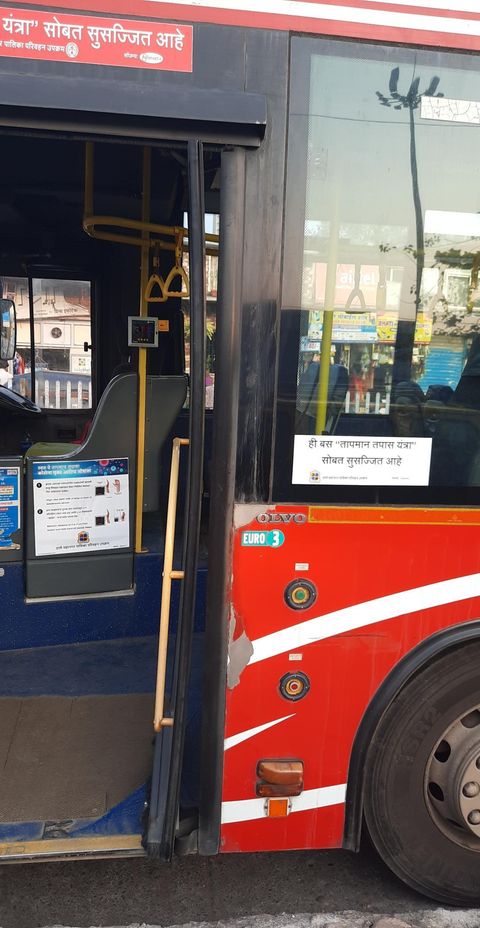
Several buses operated by the Thane Municipal Transport (TMT) undertaking have been fitted with thermal scanners for passengers to check their body temperature on entry into the bus. The scanner – essentially an infrared thermometer, much like the handheld ones that have become common recently – is located near the driver’s cockpit in the untertaking’s Volvo fleet where passengers generally enter from the front.

A note on the exterior of the bus states that the bus is equipped with a “temperature checking device in Marathi. Detailed instructions on how to use them are provided inside the bus next to the scanner.

Here is a picture of the scanner, clicked by fellow bus-fan Pankaj on Instagram.

TMT bus with thermal scanner. Picture via Pankaj's Instagram.
TMT bus with thermal scanner. Picture via Pankaj’s Instagram.

I’m not sure if other TMT buses or buses operated by any other transport body in the Mumbai Metropolitan Region are equipped with scanners yet.

AC buses operated by BEST are mostly on lease from private operators so including a scanner might be problematic. Further, given BEST’s minimum fare of ₹6 on AC buses, they remain crowded (especially in the absence of trains) and this may not work out well.

This measure, although welcome, should have been implemented at the start of the pandemic.

Let’s hope passengers make good use of it.

Also, don’t forget to follow Pankaj on Instagram: @_____pankaj____16

Also Read: Asian cities virus-proof public transit with smart shelters, thermal scanners by Rina Chandran for Reuters.

Also, if you intend to go out, don’t forget a mask and sanitizer!

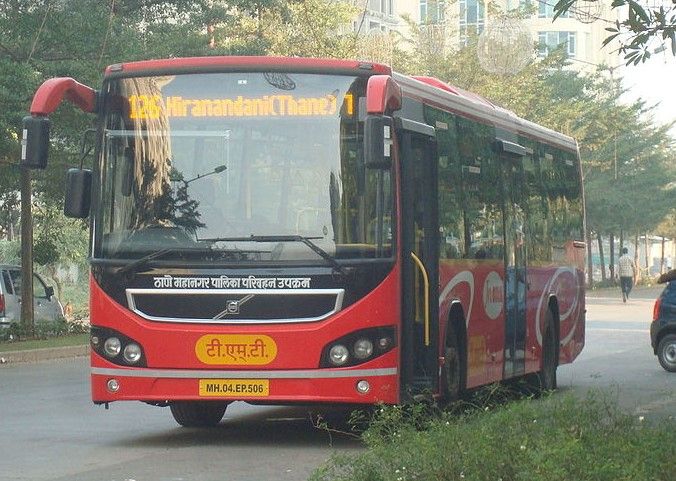
Featured image: TMT Volvo on Route 126 (Dharmadhyaksha/Wikimedia Commons)

Loading

Flattr this!

A List Of All The AC Buses Currently Operating In Mumbai

NOTE: This is an outdated list. For the latest AC routes, please download the Chalo App.

BEST is launching newer AC buses with each week. Here is a list of all the AC buses that they operate.

Regular Routes: Mini/Midi buses using Force Motors/ Tata Marcopolo CNG/BYD Olectra buses

A-4 Andheri Station (West) to Oshiwara Depot/Goregaon Depot
A-3 Vijay Vallabh Chowk (Pydhonie) to Jijamata Udyan via Johar Chowk, Mazgaon, Byculla Station (East)
A-32 Goregaon Bus Station (West) to Aai Tuljabhavai Chowk/Lokhandwala Complex Junction/Infiniti Mall
A-33 Seven Bunglows Bus Station/Saat Bangla to Oshiwara/Goregaon Depot
A-42 Sandhurst Road Station to Pandit Paluskar Chowk (Opera House) via S.V.P Road
A-63 Byculla Station (West) to Breach Candy Hospital
A-77 Byculla Station (West) to Breach Candy Hospital via Mahalaksmi Station, Haji Ali
A-101 Chhatrapati Shivaji Maharaj Terminus (CSMT) to Shyama Prasad Mukherjee Chowk/Museum
A-102 Grant Road Station (East) to Vijay Vallabh Chowk (Pydhonie)
A-104 Grant Road Station to J Mehta Marg
A-105 Grant Road Station (West) to Kamala Nehru Park
A-110 Wadala Station (West) to Sangam Nagar (Vidyalankar)
A-111 Chhatrapati Shivaji Maharaj Terminus (CSMT) to Dr Shyama Prasad Mukherjee Chowk/Museum
A-112 Churchgate Station/Ahilyabai Holkar Chowk to Gateway of India
A-122 Churchgate Station/Ahilyabai Holkar Chowk to Ballard Pier
A-153 Bycull Station (West) to Vasantrao Naik Chowk (Tardeo) via Saat Rasta, Mumbai Central
A-155 Grant Road Station (West) Ring Route via Tardeo, Haji Ali, Jaslok Hospital Cumbala Hill Post Office, August Kranti Maidan, Nana Chowk
A-157 Grant Road Station (West) to Cumbala Hill Post Office via August Kranti Maidan
A-163 Parel Station (East) to Prabodhankar Thackeray Udyan Bus Station (Sewree)
A-167 Prabhadevi Station (West) to Comrade P. K. Kurne Chowk/Worli Doordarshan
A-170 Prabhadevi Station (West) to Lower Parel Railway Station (West)
A-174 Wadala Station (East) to Bharani Naka
A-180 Oshiwara Depot/Goegaon Depot to Jogeshwari Bus Station
A-203 Andheri Station (West) to Juhu Bus Station
A-210 Versova Yari Road Bus Station to Monginis
A-211 Bandra Station (West) to Chuim Village
A-214 Bandra Station (West) to Mount Mary Steps
A-217 Dadar Station (East) Ring Route via KEM Hospital
A-217 Dadar Station (East) to KEM Hospital
A-219 Bandra Station (West) to Bandra Reclamation Bus Station
A-220 Bandra Station (West) to Sherly Village
A-221 Andehri Station (West) to Natasha Towers
A-234 Jogeshwari Bus Station to Shree Swami Samarth Nagar
A-235 Andheri Station (West) to Monginis
A-248 Andheri Station (West) to Ramesh Nagar
A-249 Andheri Station (West) to Seven Bunglows Bus Station
A-251 Seven Bunglows Bus Station to Versova Yari Road Bus Station
A-252 Andheri Station (West) to Sardar Vallabhai Patel Nagar (Mhada Layout)
A-254 Andheri Station (West) to Veera Desai Road (Extension)
A-257 Andheri Station (West) Ring Route via Juhu Vile Parle Bus Station (JVPD Bus Station)
A-260 Oshiwara Depot to Indian Oil Nagar (D. N. Nagar Metro Station)
A-266 Andheri Station (West) to Swami Samarth Nagar Circle
A-268 Andheri Station (West) to Shree Swami Samarth Nagar
A-273 Malad Station (West) to Malvani Block No 5
A-302 Rani Lakshmi Chowk (Sion) to Maharana Pratap Chowk/Mulund Check Naka
A-312 Rani Lakhsmi Chowk (Sion) to Pratiksha Nagar Depot
A-337 Agarkar Chowk to Chhatrapati Shivaji Maharaj International Airport Terminal 2
A-338 Agarkar Chowk to Sahar Cargo Complex
A-341 Rani Laksmi Chowk (Sion) to Antop Hill Bus Station
A-352 Rani Lakshmi Chowk (Sion) to Trombay
A-361 Chembur Colony to Mahul Village via Vashi Naka
A-362 Deonar Depot to Kurla Station (East)
A-363 Chembur Colony to SRA Colony (Mahul)
A-367 Chembur Colony to Gadkari Quary
A-369 Chembur Colony to MMRDA Colony/Vashi Naka
A-372 Anushakti Nagar to Shivaji Nagar Junction
A-441 Agarkar Chowk to Mhada Colony (Majas)
A-447 Goregaon Station (East) to Santosh Nagar (Extension)
A-451 Goregaon Station (East) to Adarsh Nagar (Aarey)
A-452 Goregaon Station (East) to Mayur Nagar
A-481 Dr. Babasaheb Ambedkar Udyan, Chembur to MMRDA Colony, Vashi Naka
A-624 Malad Station (East) Poddar Park to Anand Nagar/Appa Pada
A-646 Goregaon Station (East) to Nagari Niwara 1&2 via IT Park

BKC Routes: MMRConnect Buses using Tata Starbus Hybrid buses

BKC-10 BKC Telephone Exchange to Borivali Railway Station (East)
BKC-11 Bandra Railway Termninus to Hiranandani Estate (Thane West)
BKC-12 Bandra Railway Terminus To Jalvayu Vihar (Kharghar)
BKC-13 Bandra Railway Terminus to Maharana Pratap Chowk/Mulund Check Naka Bus Station
BKC-16 Agarkar Chowk to SEEPZ Village
BKC-21 Bandra (East) Bus Station to Bharat Diamond Bourse
BKC-22 MMRDA Pay and Park (BKC) to Kurla Station (West)
BKC-23 Bandra (East) Bus Station to C.A Institute (BKC)

NMMT AC Buses (only those entering Mumbai city limits)

AC-103 Panvel Railway Station (West) to Hindamata Cinema (Dadar)
AC-105 Bandra Railway Station (West) to CBD Belapur Bus Station
AC-107 World Trade Centre to CBD Belapur Bus Station (via Eastern Freeway)
AC-108 World Trade Centre to Nerul Sector 46/48
AC-110 World Trade Centre to Jalvayu Vihar (Kharghar)
AC-111 World Trade Centre to CBD Belapur Bus Station (via Parel, Dadar)
AC-115 World Trade Centre to Kharkopar Railway Station
AC-121 World Trade Centre to Gansoli/Gharona
AC-123 Borivali Railway Station (East) to Owe Gaon/CISF
AC-124 Agarkar Chowk to Karave Nagar, Nerul
AC-125 Borivali Railway Station (East) to Asud Depot
AC-126 Borivali Railway Station (East) to Panvel Railway Station (West)
AC-127 Ghatkopar Station (East) to Vashi Railway Station
AC-131 Borivali Railway Station (East) to Ghansoli Depot

TMT AC Buses (only those entering Mumbai city limits)

AC-65 Borivali Railway Station (East) to Thane Station (East)/Kopri
AC-125 Agarkar Chowk to Kasarvadavali Naka
AC-126 Reserve Bank of India (BKC) to Hiranandani Estate (Patlipada)
AC-144 Cadbury Junction to Mantralaya

If you like the blog, do consider becoming a Patron on Patreon by clicking the link below.

Become a Patron!

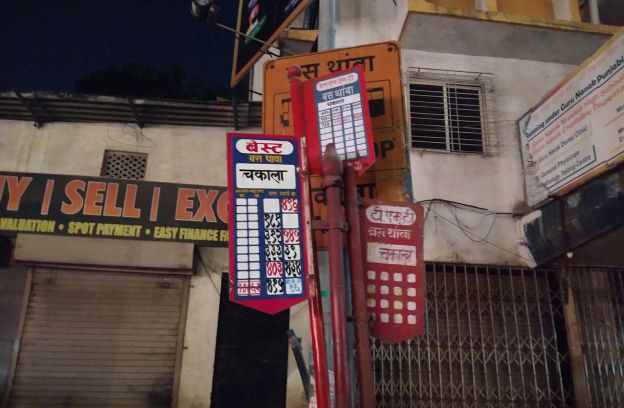
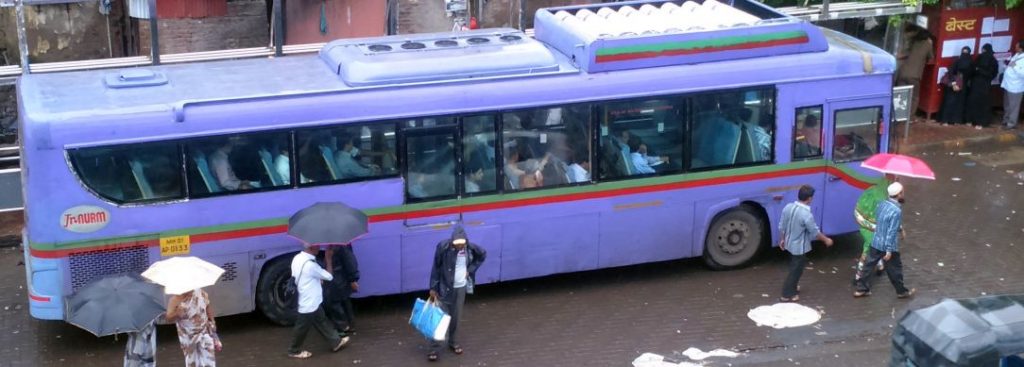
Featured Image: Tri-Services at Chakala (Srikanth Ramakrishnan/Twitter)

Loading

Flattr this!

More Nightlife In Mumbai Is Great But Can We Also Focus On Improved Public Transport?

Nightlife And The Evening Economy: Aaditya Thackeray Seems To Have Understood It Well, When Will Others Follow Suit

Yuva Sena President Aaditya Thackeray last week (20 December) tweeted out that state government (of which the Shiv Sena is a part) had notified a proposal titled ‘Mumbai 24 hours’. The proposal in question, spearheaded by the junior Thackeray seeks to allow businesses to stay open 24 hours.


N

Now it is worth noting that Thackeray mentions establishments outside of five-star hotels in non-residential areas that can be accessed by all and sundry. This seems to be a good move to ensure that nightlife in the country’s financial capital is given its due, since most establishments down their shutters by 2 am.

Why is nightlife important?

The ‘regular’ society usually goes to sleep at night and wakes up the next morning to continue their life. However, with the advent of globalism, world is fast-changing to adapt to 24-hour activity. Take the example of the information technology (IT) and the IT-enabled services (ITES) sectors. Both of them – predominantly dealing with clients in the west – are pretty much active the entire day. Even the media, today functions round-the-clock. Freelancers across various industries too are active across the day, not just to deliver to foreign clients, but also within the country.

With establishments being active throughout the day and night, it gives people an opportunity to venture out at night for various reasons. Many a café that offers internet connectivity attracts people looking to get work done.

Mumbai, like most other metropolitan areas in India is home to numerous startups. Startups, by virtue of being startups invariably see a flexible work schedule usually running beyond the confines of sunlight.

Many such entities operate out of cafes and other establishments (including shared workspaces) due to the lack of a physical office and would thus be the biggest beneficiary of such a move. They could now hold meetings, meet people or just get some work down outside of their usual spaces.

A shift in a city’s operations

Night-time has hitherto been the domain of young partygoers. Work usually takes a backseat, but off-late it has seen an increased presence in major cities.

This brings about another important factor: Crime. A lot of crimes take place at night when fewer people are out. If more people venture out, it would in essence make it more difficult for criminals to strike. This sends out an important point to the law enforcement: Increase patrolling at night. However, in a country like India, it might see an increase in moral policing as well.

The next logical step for the administration is to increase the availability of public transport at night. With the advent of ride-sharing, traveling at night is an easier affair, but then ride-sharing is not everyone’s cup of tea. More buses and trains in the night will mean people who stay out late or have to leave in the dead of the night will have transit options, thus leading to better productivity in terms of real-time activity.

However, nightlife does come with a rider – those who venture out at night must accept that they face the risk of being the victims of a crime. Conversely, it also indicates that law enforcement must step up to ensure better vigilance and patrol at night.

While Mumbai doesn’t have a sizable amount of industries that operate throughout the clock-cycle, other cities such as nearby Pune and Bengaluru do. For many an IT employee, working the night shift usually means the lack of access to a restaurant or café in the event they want to go out. Shouldn’t they too have the freedom to go to an establishment at any time of the day?

Thackeray, being a youngster, clearly understands the advantages of having a continuously operating city. Perhaps it is time that other cities too, take a look at it.

Now for the transit

It is imperative that public transit remains functional all the time. The Suburban network shuts of for 2.5 hours in the night. The Metro shuts at midnight. Why not have them operational round the clock? Let buses run at night too, not just BEST, TMT and NMMT, but also MSRTC. The last Shivneri between Mumbai and Pune leaves at 11-11.30 in each direction. It needs to operate even at night, at least towards Mumbai.

Having any time transit is the first step to more economic activity and productivity.


Loading

Flattr this!

Saving the BEST: A look back

Saving the BEST, a wonderful article by Rajendra Aklekar, journalist and author of the highly acclaimed book ‘Halt Station India’, appeared on Sunday’s edition of The Hindu. I’m going to attempt to reinterpret his article with a little bit of my own thoughts in the process.

Mumbai has traditionally been dependent on its railway lines for commuting. This dependency has been justified by their reach, optimal efficiency, and reliability. This makes them more than just a Rail Network. It makes it a lifeline, because it brings together the entire Mumbai Metropolitan Region.

The story with the road is similar. BEST buses have been on the roads for quite a while now. Motor Buses were to make their first appearance in 1913, operated by the Bombay Electricity Supply and Tramways Company Limited [BES &T Co. Ltd] which was set up in 1907, but didn’t turn up till 1926 because of World War I. Prior to this, the Bombay Tramway Company Limited operated horse-drawn trams in Bombay from 1873 with Electric Trams appearing on the scene in 1906 after BES&T took over the BTC. Today, BEST’s ubiquitious red buses form the last mile [or kilometre] connectivity for millions of passengers from both the city itself, as well as its suburbs and satellite towns.

However, things are changing. BEST is already in knee-deep trouble, getting passengers, especially for its lacklusture AC services that have been beaten by NMMT and TMT, although BEST is seemingly gaining a steady foothold after the recent fare revision. Further, app-based aggregators, including Ola, Uber, ZipGo, Shuttl, rBus, are all eating into BESTs revenue. To add to this, the Mumbai Metropolitan Regional Transport Authority [MMRTA] is now allowing private buses to ply point to point within the city without a permit.

The fault here lies in not only the competition, but also BEST. Corruption, Politics, Unions, all have made the Red Bus seemingly irrelevant in today’s life.

To put it in figures, BESTs Transport Deficit is -₹858.02crore. Its Electricity Surplus of ₹925.41crore is what is keeping it floating, along with some cash flowing in from the MCGM.

While it common to understand that Public Transport, being considered Public Service is bound to go thru losses, why are BESTs coffers in such a precarious state?

As Mr. Aklekar puts it, it all has to do with the management of BEST. It has an Administrative Wing and a Committee that is a Political Body. The two often overstep their boundaries, since it is blurred, and cause skirmishes, which leads to losses.

Along with this, it is also BESTs lack of keeping pace. NMMT and TMT went the BMTC way by procuring high-end Volvo buses while BEST remained with their scam-tainted Punjab-made Cerita fleet that were procured under the name of ‘Kinglong’ buses. This, along with the fact that BEST had abysmally high fares for their dilapidated buses just made things worse. BEST’s ITS was a total failure, because it required users to send an SMS and was full of bugs. Later on, it got shut down. Of course, let us not forget BEST’s tryst with Electronic Ticketing, which for a Municipal Level Transco, is a commendable effort, one worthy of a case study.

While BEST doesn’t provide WiFi on buses, something the Mumbai Metro does, I have seen a bus with a White Box behind the Driver saying WiFi. Maybe this was a one-off trial.

While Mr. Aklekar points out that BEST didn’t have a public time-table, I did find out that BEST did indeed have one, visible on its website when searching for a route, and also visible on the Mobile app m-Indicator. Of course, the increased traffic on the city’s roads have practically rendered timetables useless. Last September, the day after Anant Chaturdashi, I ended up catching the 9.30 AS4 from NSCI to Backbay at 10.15 thanks to the traffic.

When Delhi can track its Cluster buses and Autos, why can’t BEST? 3500 buses aren’t hard to track. BEST can set up a system on a Public-Private Partnership and licence its API for others to use if they’re unable to give it out for free.

He also talks of bus stops using electricity for advertising. The power can also be used to light it up for the safety of commuters, as well as a Public Information system for arrivals. I believe this should be easy, atleast within town limits, given that BEST supplies power there. BEST can also explore the possibility of solar powered bus stops.

Why can’t BEST go the Ola-Uber way and tap into the Google Maps API to show where a bus is? Get an app, track buses, guide commuters to the nearest bus stop. Let them buy a ticket with the app! Paper tickets are great. Make them greater. Print some ads on them. BEST used to do so with their earlier punched tickets. Why not now? Print a WiFi password on it as well, so that commuters with a ticket can use it. Passholders can probably have it using an app!

While I had earlier stated that I would be favour of participation from the private sector to keep the city’s transport in shape, the case with BEST is peculiar. The decentralised nature of the Mumbai Metropolitan Region allows each Municipal Corporation to run their own buses. Why can’t BEST, NMMT and TMT coordinate their bus services? Why do they have their toxic competition?

BEST represents the city of Mumbai in many ways. It is a Heritage structure in itself. If not for anything else, BEST, its red buses, their bell pulls, the Double Deckers, makes the Undertaking unique in India. Even the Purple Faeries make them unique.

BEST needs to get its act together. Or else India’s Oldest Transport Body, a crucial part of Mumbai’s Heritage, Culture and History would be lost to the annals of time.


Click here to read Rajendra Aklekar’s article Saving the BEST.

Click here to buy Rajendra Aklekar’s Halt Station India


Loading

Flattr this!

BEST slashed its AC fares by half. What happened then is obvious!

BEST recently slashed its AC fares by 50%. The results of this, while obvious, are quite shocking.

BEST also introduced several new routes: AS-71, AS-72, AS-318, AS-415.

Earlier, NMMT and TMT AC buses would always run full while BEST buses were like Chauffeur services, with one or two passengers in some of them. The reasons were clear: BEST used its Purple Faeries while the other two use Volvos, and further, BEST charged one and a half [1.5x] times what the other two charged.

But not any more. BEST’s minimum AC fares have come down from ₹30 to ₹15 while NMMT and TMT charge ₹20.

The Net Result?

BEST’s AC buses are seeing a higher patronage. BEST, whose ridership had fallen from 43lakh to 30lakh, is now trying to get it to 45lakh.

Take a look below and see how two AC buses are performing.

AS-318

This is AS-318 at Bandra Bus Station [East] towards the Bharat Diamond Bourse in Bandra Kurla Complex.

As you can see in the picture, the bus is quite full.

BEST bus AS-310.
BEST bus AS-310. Image copyright Coolguyz.

AS-415

This is AS-415 from Agarkar Chowk to SEEPZ. As you can see, the bus is full of passengers.

BEST bus AS-415.
BEST bus AS-415. Image Copyright Coolguyz.

When was the last time you saw a BEST AC bus full of passengers? 2009? 2010.

With BEST getting the new Tata Starbus Hybrid fleet soon, things are just going to improve.

Of course, as stated earlier, BEST needs to get rid of the Cerita fleet soon and go for more powerful Ashok Leyland, Corona, Scania and Volvo buses to sustain this increase in passengers.

BEST slashed its AC fares by half. What happened then will NOT blow your mind! Share on X

Images courtesy Coolguyz from Skyscrapercity.

Go ahead. Share this article. Share the joys of traveling in India’s Oldest Public Transport Company.

Save

Save

Save

Save

Save

Loading

Flattr this!

BEST Announces Revised Fare Structure

Two months after BEST announced its intentions to rationalise fares, BEST has kept its promise and revised them.

BEST has already started the new AC routes [AS310, AS415, AS71, AS72]  proposed, and as of 1st July 2016, the new fares are in operation..

The new BEST committee headed by the BJP has done well in giving BEST the necessary shot in the arm.

The new rates are close to half of the earlier ones.

Here are the rates:

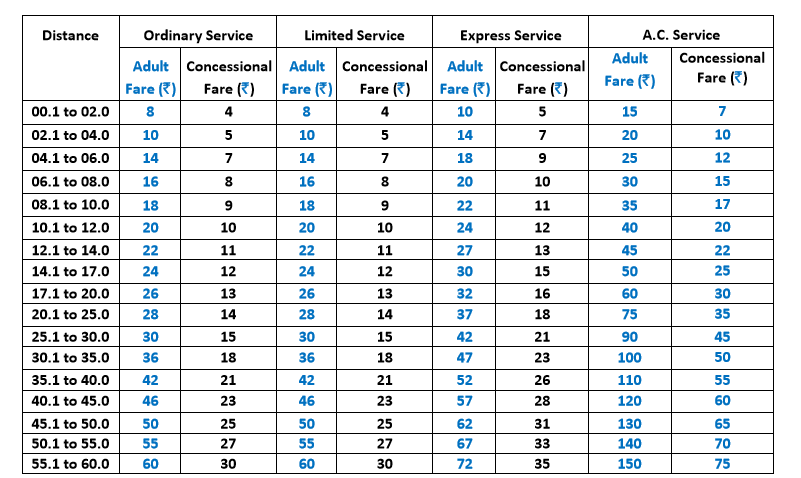
BEST Fare structure July 2016

The usual conditions, such as 15 paise nutrition surcharge, concessional fares for children below 12, flat fare of ₹2 for visually-impaired passengers, additional charge of ₹1/₹5 for non-AC/AC buses beyond MCGM limits and luggage rates are applicable.

Passes and Happy Hours

For passes, monthly and quarterly rates have been reduced. For Daily Passes, the rates for the non-AC passes are the same. The AC Magic Day Pass now costs ₹150, as was the case before the April 2015 fare revision.

A separate fare structure exists for Children, which costs roughly half the regular adult fare.

The concept of Happy Hours has been introduced, between 1100hrs and 1700hrs [11am to 5pm]. During Happy Hours, all passes are sold at the rate of Child Passes.

For the full fare revision; please click here.

A friend reported that post the fare revision, a ₹105 trip from the JVLR/Jay Coach Junction to Airoli in an AS524 now costs ₹65.

This would mean that a trip from Thane Station [East] to Borivali Station [East] on AS700 would cost around ₹75-80 instead of ₹120, bringing it on par with TMT AC65 and NMMT AC131.

Similarly, Agarkar Chowk to Mulund Check Naka Bus Station on As422 should cost ₹60 instead of ₹100.

All this brings BEST on par with NMMT and TMT in terms of fares. Interestingly, while NMMT/TMT have hiked their fares in view of the recent introduction of a 6% Luxury Tax by the Government of India, similar to BMTC and TSRTC, BEST has reduced the fares. One would have to assume that the new reduced fares are inclusive of this surcharge.

Now, with the new fare structure in place, BEST needs to work on a few things, mostly dealing with its AC fleet. They are:

  • Fix the Cerita fleet. Get them in working order as long as they are around. Some of them have been converted into non-AC buses to replace the Starbus fleet that has been taken off the roads.
  • Get those 46 Volvos from Asian Concierge. Crucial for BEST to remain in the competition.
  • Reintroduce routes such as AS422, AS4, AS1 on Sundays.
  • Reintroduce discontinued routes such as AS505 to take on NMMT’s AC105.

BEST is certainly moving in the right direction. With a few more steps, it can soon recover its losses and be a role model for other Transcos.


Save

Save

Save

Loading

Flattr this!