After BMTC and MTC, BEST too has opted to go in for a QR code-based UPI payment system, except this time it is to eliminate loose change lying with the undertaking.
As reported by Rajendra Aklekar for Mid-Day, the new system will be tested by BEST for buses belonging to two depots, Wadala and Colaba. Conductors will wear a badge with the QR Code on it. Commuters will have to tell conductors their destination, he will tell them the fare and then commuters can scan and make the payment using a UPI-compliant app.
BEST apparently has crores worth of loose change lying in their depots, prompting them to sometimes pay staff salaries with them.
BEST currently allows passengers to pay using their prepaid card (the ePurse) and using the Ridlr app. Both will remain independent of the new system and will remain operational.
The ePurse system was down for a significant time (seven months) in the 2018-2019 period when ticket machines failed after their provider Trimax IT filed for bankruptcy.
Let’s hope BEST’s move will see UPI adoption increase further.
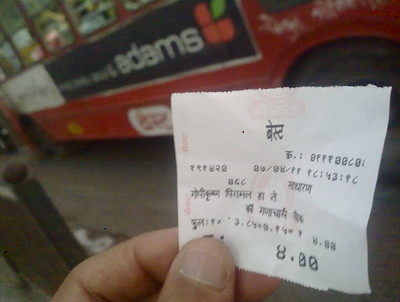
Featured image: Death of the BEST ticket; Oh, how the mighty have fallen (Satish Krishnamurthy on Flickr)
Similar to the decision of the Bangalore Metropolitan Transport Corporation (BMTC), the Metropolitan Transport Corporation (MTC) of Chennai, fka Pallavan has also decided to implement a QR Code-based cashless ticketing mechanism on its buses.
The announcement was made by Tamil Nadu Minister of Transport M R Vijayabhaskar on 1 June 2020 via Twitter.
பேருந்துகளில் Cashless Transaction முறை அறிமுகப்படுத்தப்பட்டிருக்கிறது.
QR Code மூலமாக எந்தவொரு Cashless Transaction -ம் அனுமதிக்கப்படும்.
சோதனை முறையில் முதற்கட்டமாக 2 பேருந்துகளில் Paytm மூலம் Transaction செய்வதற்கான ஏற்பாடுகள் செய்யப்பட்டிருக்கிறது. #TNGovt#TNTransport
— M.R Vijayabhaskar (@OfficeofminMRV) June 1, 2020
In his tweet, Vijayabhaskar has said that QR-code based cashless transactions were now permitted and that a trial run had begun using Paytm. According to a report by The Hindu, the two buses were both bound for the Secretariat at Georgetown with one originating at Thyagaraya Nagar (T Nagar) and the other at Todhunter Nagar in Saidapet.
Officials at MTC have said that once more buses hit the street, the system will be extended to them as well. Commuters can use any UPI-based payment app such as Google Pay/Tez, Paytm, PhonePe, KhaaliJeb or their bank app.
The system is very similar to the system that the BMTC has set-up, which is essentially only for cashless transactions and not cashless ticketing.
While the immediate side-effect of this would be an increase in UPI adoption across Chennai, it will still remain a time-consuming method. In the long run, the state government has to promote the National Common Mobility Card as a means to go forward.
One hopes that the MTC’s parent body, the Tamil Nadu State Transport Corporation (TNSTC) starts extending this to other cities including Coimbatore, Trichy and Madurai.
For UPI platforms, this is a golden opportunity to expand their footprint. While the better known apps like BHIM, PhonePe, Google Pay (formerly Tez) and Paytm have managed to get a market of their own, smaller niche apps like KhaaliJeb can make an impact here. KhaaliJeb (literally Empty Pocket in Hindi) is a UPI-based payments app designed for students. According the developers, the app has a student loyalty that will offer them discounts from merchants while also allowing them to split expenses. Given Chennai and Coimbatore’s status as educational hubs, this is the right time for such apps to strike gold.
If all goes well, it might seem like the Pallavan Kollavan (Killer Pallavan) tag might actually refer to cash.
Times are hard, and your support would help a long way in keeping this blog alive. Do consider supporting me on Patreon.
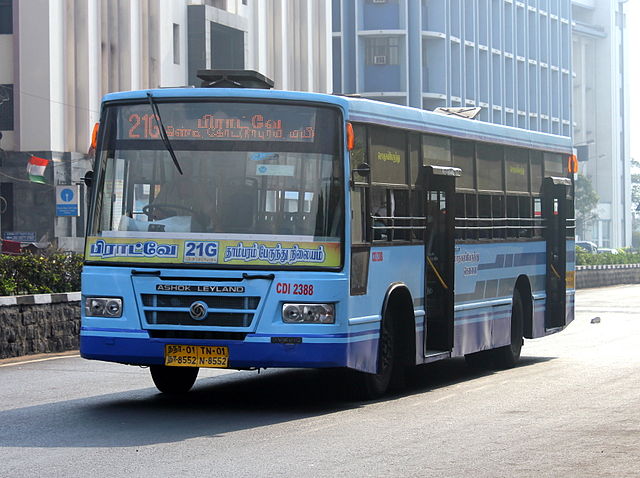
Featured image: An MTC bus belonging to the Central Depot on Route 21G from Broadway to Tambaram Railway Station. (Photo credits: VtTN on the Wikimedia Commons).
Last month I wrote on how we needed to look at changing our ways of transacting in order to reduce the risk of contamination using physical currency. One of the points I had made was to target the transit sector in order to get people opt for cashless transit.
Many of of us expected the 2016 demonetisation to be the catalyst for a shift to cashless methods of travel, sadly it did not take off well. A year later, the situation was no different in adoption of digital payment systems in public transport.
In September 2018, the Central government finally announced the launch of the ‘One Nation, One Transport Card’, a rebadged version of the previous government’s long-dead More Card project. The National Common Mobility Card (NCMC), was finally launched on 5 March 2019 (also my birthday) but is still being rolled out and as of now is only available on the Delhi Metro.
Older readers of BESTpedia would remember that I had spoken to BMTC officials in 2016 on their Intelligent Transport System (ITS) and the impending release of a prepaid card for buses (similar to what Mumbai’s BEST has). While the smart cards were never a part of the ITS, they were due to be released by the end of 2016 but that did not happen.
The Times of India on 27 May reported that BMTC would implement a new measure to enable cashless transit in its buses. While initially implemented on 70 buses, it is now being expanded to 1,000 buses of the 3,500 buses that are currently on the streets.
The cashless ticketing system, however is not what most of us expected.
Each bus is equipped with a quick response code (QR Code) that is compliant with BharatQR and uses the Unified Payments Interface (UPI) to make payments. Passengers can use any UPI-based app such as Paytm, Google Pay, or PhonePe to complete the transaction and once the transaction is done, the conductor issues a ticket.
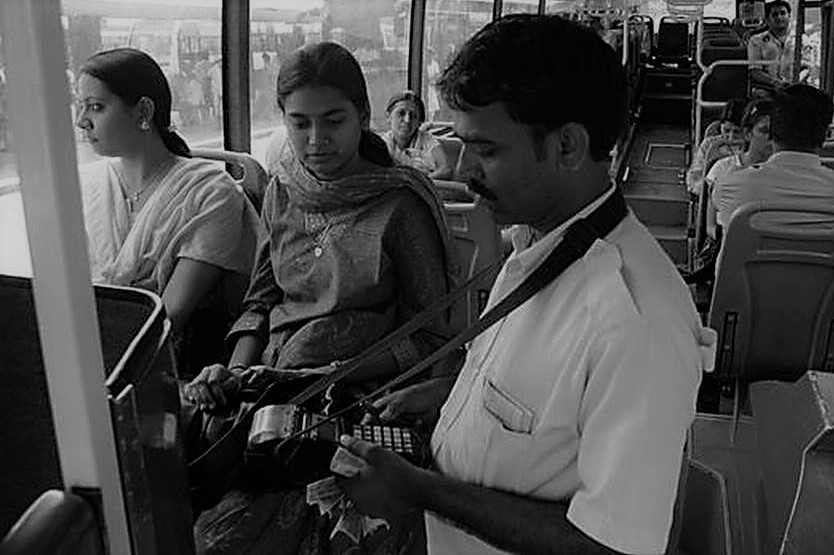
Here is an image of the conductor with the QR Code handing around his neck.
It is important to note here that the QR code based payment isn’t direct cashless ticketing, but rather a cashless transaction after which the ticket is issued manually. It isn’t similar to the QR code based ticketing used by the Indian Railways using the UTS app, or by Metro Rail systems in India. The latter uses QR codes on phone screens or paper tickets that are scanned at the turnstiles rather than the commuter scanning them with their phones.
While this is a good move in the interim, it would be good to see BMTC implement a full-fledged card-based payment system, on the lines of the NCMC.
The unintended side-effects of this move
The QR code idea, however has its merits. The direct consequence would be more people adopting UPI as a payment method over physical cash systems. Commuters using UPI would mean that anyone remotely connected to the BMTC network –from a food vendor at the bus station to a tea stall frequented by staff – would start accepting UPI as a payment method. The entire “Local Economy” would end up making use of it over time.
All in all, this is a much-needed push by BMTC. The next stop would be a complete integration on to the NCMC so that we can go truly cashless. Who knows, the next big thing may be transcos accepting USSD-based payments as well. Alternatively, BMTC needs to push for app-based payments, similar to what Ridlr offers for BEST where a user purchases a ticket with the app which in turn generates a four to six digit number. The commuter tells the number to the conductor, who validates it with the ETM.
BMTC finally goes cashless, and how.
If you liked this article, please do consider supporting me on Patreon. A small amount would do.
The last few weeks have been rather worrisome for many businesses due to the ongoing Covid-19 pandemic, not only because of the state of the economy but because they deal primarily in cash. A government notification in March also advised users to avoid cash and instead digital platforms as a safety measure. Viral videos on popular social platforms of people licking currency notes and wiping their noses with them has furthered the paranoia.
When Prime Minister Narendra Modi announced demonetisation in 2016, it did lead to a boom in digital transactions, especially with wallets such as Paytm but eventually with Google getting onto the Unified Payments Interface (UPI) bandwagon, cashless payments began to soar. As per data from the National Payments Corporation of India (NPCI), the UPI platform witnessed a record ₹1.31 billion in transactions in December 2019 with the total transaction value exceeding ₹2 trillion.
While demonetisation did not give digital transactions the necessary push – most people returned to cash once the shortage had ended – the ongoing pandemic may inadvertently do just that. A 2009 CNN report said that nearly 90 per cent of American currency had traces of cocaine on them. Given that hygiene is not a big issue in India yet, one can imagine the kind of substances that are present on Indian currency – it doesn’t have to be opioid, just dirt and germs.
This would be an ideal time for the government to slowly push for more digital transactions. With the 2019 Union budget doing away with merchant charges for merchants with an annual turnover of above ₹50 crore, the time is ripe for us to rethink stepping into the digital world. The sentiment isn’t restricted to India alone. An Op-Ed on Bloomberg highlights why Apple Pay is looking like a good alternative in the United States to both cash and credit cards. While Apple Pay is yet to enter India, we already have a host of digital payments systems, most of which are based atop NPCI’s UPI platform while some retain independent wallet-based mechanisms of their own.
The biggest hurdle however will continue to be the lack of banking access for many. A 2016 report by PriceWaterhouseCoopers stated that the number of Indians without a bank account went down from 557 million in 2011 to 233 million in 2015. Of these, 187 bank accounts were opened under the Pradhan Mantri Jan Dhan Yojaya (PMJDY) alone. While many of these accounts haven’t been used much since their opening, that is not a problem. While urban India can be persuaded to switch to UPI-based platforms, rural India can use the NPCI’s National Unified USSD Platform (NUUP)or *99# service that works with basic phones for smaller transactions. For those who don’t have mobile phones, the RuPay debit card is always there.
In order to start the shift to digital transactions, the challenge would not be with larger players but the smaller ones. The local grocer, tea stall and bakeries are what need to be targeted. Add to that the discounts offered by UPI apps such as Google Pay, Paytm or KhaaliJeb – the latter offers discounts to students – getting more people on the platform is relatively easier.
The next step would be to target the transit sector. While rail is generally covered with the Unreserved Ticketing System (UTS) app and metro rail is covered by smart cards and app-based systems, the focus should be on buses. Very few cities have managed to go completely digital in the field of bus ticketing, with Mumbai being the shining example. In order to better facilitate this, the Centre needs to rush the much-delayed National Common Mobility Card (NCMC) that was announced yet again in 2018. While urban bus services are easier to handle, the rural sector needs be prioritised as that is what will lead to a mass movement.
By targeting specific sectors, the financial sector has a higher chance of success rather than a generalised approach. In order to incentivise the shift, the Reserve Bank of India may need to slash a few transaction charges like 2016. Once the shift reaches critical mass, a sunset policy for incentives need to take over. Countries like Sweden allow traders and retailers to refuse cash under the Freedom of Contract and this needs to find a way into our legislation as well.
The biggest advantage of going cashless – not counting the associated risks of handling dirty money – is that it eliminates small loses in the form of lose change going missing. In the long run, it paves the way for the government to finally look at slowly doing away with Income Tax and replacing it with a Transaction Tax.
The ongoing pandemic has given us opportunities to take things forward to a new level, albeit unintentionally, and we should seize the moment and get things done.
If you liked this article, please do consider becoming a patron.